
Most of us care about fairness. We want to be treated with respect, see others treated justly, and believe that effort should be rewarded. But for some people, perceived unfairness carries a much greater emotional weight.
An overlooked contribution, an unfair decision, or witnessing someone else being mistreated can trigger strong feelings of frustration, anger, or disappointment. This heightened awareness, known as justice sensitivity, can be a powerful strength—it often reflects deep empathy, integrity, and a commitment to doing what’s right. At the same time, when left unchecked, it can create unnecessary stress, strain relationships, and make it difficult to let go of situations beyond our control.
In this article, we’ll explore how justice sensitivity shapes our daily lives and how to channel it in ways that promote both personal well-being and positive change.
Table of Contents
Core Dimensions and Types
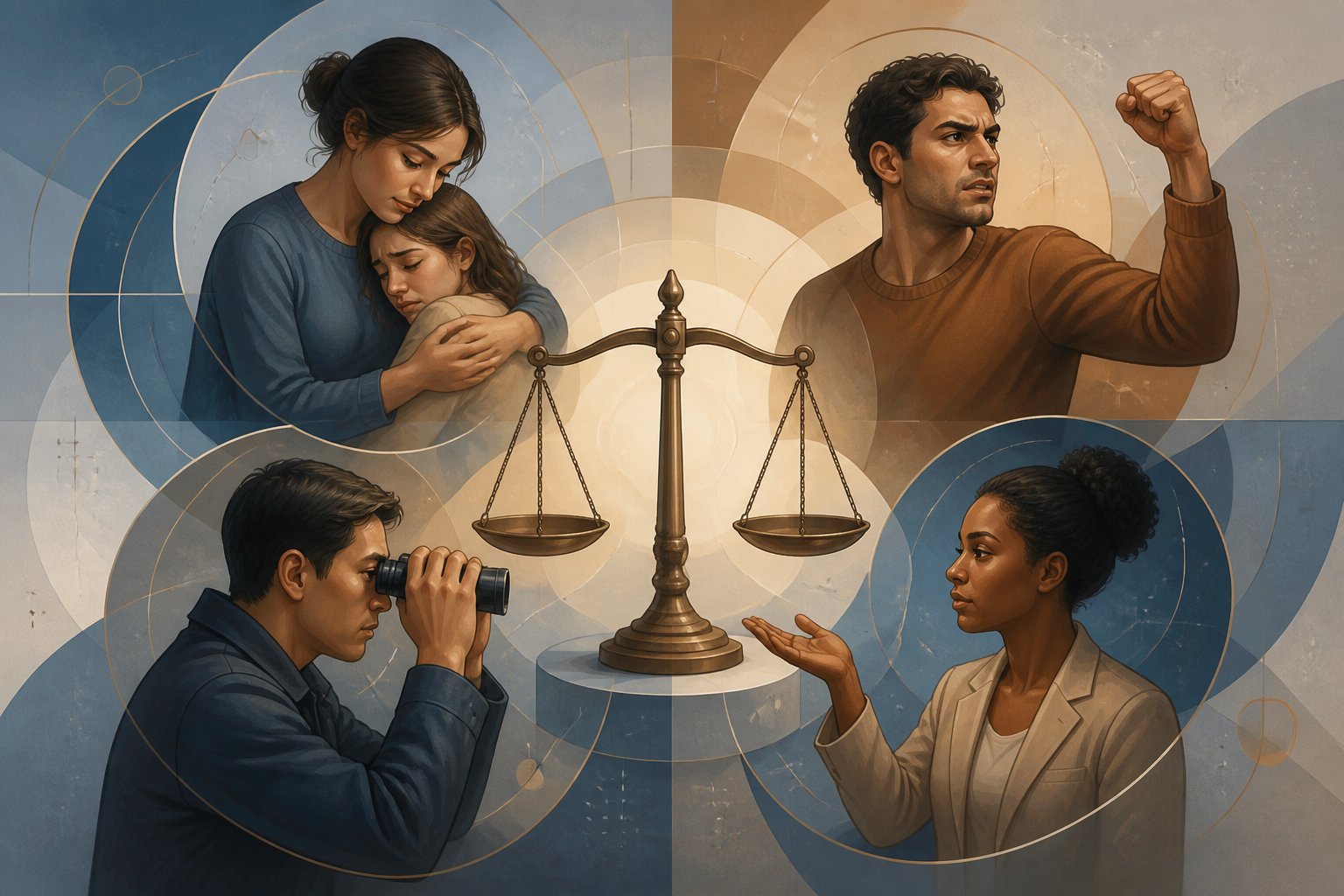
Justice sensitivity exists in four distinct perspectives that capture how you react to unfairness in different roles. Your responses change depending on whether you experience injustice directly, watch it happen to others, benefit from it, or cause it yourself.
Victim Sensitivity
Victim sensitivity describes how strongly you react when you experience unfair treatment yourself. If you have high victim sensitivity, you notice quickly when others treat you unjustly. You might feel intense emotions like anger or hurt when someone wrongs you.
People with strong victim sensitivity often remember past injustices vividly. You might dwell on situations where you were treated unfairly. This heightened awareness can help you protect yourself from mistreatment. However, it can also lead to seeing injustice even in situations where none exists.
Your victim sensitivity affects how you interact with others. You may become defensive or confrontational when you perceive unfairness. This reaction serves as a way to stand up for yourself, but it can sometimes strain relationships if your perception of injustice differs from what actually happened.
Observer Sensitivity
Observer sensitivity measures your reactions when you witness injustice happening to other people. When you have high observer sensitivity, you feel upset watching others experience unfair treatment. You notice inequalities and wrongs that others might overlook.
This type of sensitivity often drives you toward activism or advocacy work. You feel compelled to speak up when you see someone being mistreated. Your strong reactions to witnessed injustice can motivate positive change in your community.
Observer sensitivity connects closely to empathy. You put yourself in the victim’s position and imagine how they feel. This emotional response pushes you to take action or intervene when appropriate.
Perpetrator Sensitivity
Perpetrator sensitivity reflects how much guilt or distress you feel when you commit an injustice against someone else. If you have high perpetrator sensitivity, you experience strong negative emotions after treating others unfairly. You might lose sleep over mistakes or feel deep remorse for your actions.
This dimension acts as an internal moral compass. Your discomfort with causing harm helps you avoid unfair behavior. You work hard to make amends when you realize you’ve wronged someone.
People with strong perpetrator sensitivity often apologize quickly and sincerely. You take responsibility for your actions without making excuses. This quality helps you maintain healthy relationships and earn trust from others.
Beneficiary Sensitivity
Beneficiary sensitivity describes your reactions when you benefit from injustice done to others, even if you didn’t cause it yourself. You might feel uncomfortable receiving advantages that came from someone else’s unfair treatment. This awareness makes you notice when systems or situations favor you at another person’s expense.
Higher education levels often relate to stronger beneficiary sensitivity. You recognize unearned privileges and feel motivated to address these imbalances. Your discomfort with unfair advantages can push you toward creating more equitable situations.
This type of sensitivity shows up in everyday scenarios. You might feel guilty accepting a promotion if you know a more qualified colleague was overlooked. Your awareness of unfair benefits helps you make more ethical choices, even when those choices don’t directly benefit you.
Psychological Foundations
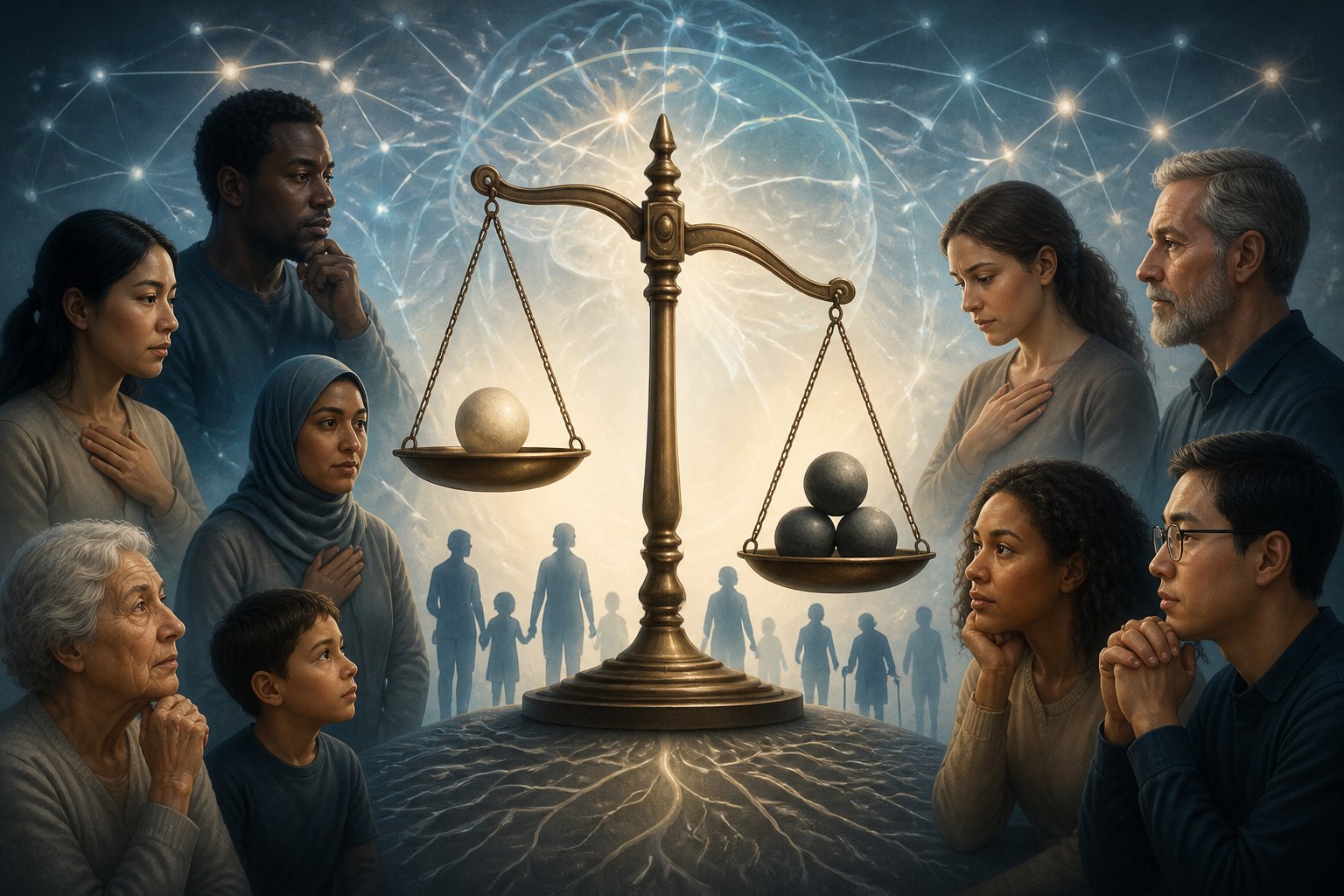
Your justice sensitivity develops through a complex mix of early experiences, personality traits, and your ability to understand others’ emotions. These psychological building blocks shape how strongly you react when you see unfair treatment.
Developmental Influences
Your sensitivity to justice begins forming in childhood. Early family experiences play a major role in shaping how you perceive fairness later in life.
Children who grow up in environments where rules are applied inconsistently often develop different justice responses than those raised with clear, fair boundaries. Your parents’ approach to discipline and fairness creates a template for what you consider just or unjust.
School experiences also matter. When you witness or experience unfair treatment from teachers or peers, these memories can increase your awareness of injustice. Positive experiences with fair resolution of conflicts can strengthen your belief in justice systems.
Questions about justice sensitivity development across the lifespan continue to interest researchers. Your responses to unfairness may shift as you gain more life experience and perspective.
Personality Correlates
Your broader personality traits connect closely with your justice sensitivity levels. Different aspects of your personality predict how you respond to unfairness.
Victim justice sensitivity links to antisocial behavior and conservative values in some studies. This means if you’re highly sensitive to unfairness toward yourself, you might hold certain political views or react more aggressively when wronged.
Your perspective-taking abilities and empathic concern interact with your justice sensitivity in important ways. These traits don’t work alone but combine to influence your reactions to injustice.
Role of Empathy
Empathy serves as a bridge between noticing injustice and taking action. Your ability to understand and share others’ feelings directly affects your justice responses.
Three types of empathy matter: cognitive empathy (understanding others’ thoughts), affective empathy (feeling others’ emotions), and compassion (wanting to help). Each type influences how you process unfair situations differently.
Research shows empathy contributes to justice sensitivity through specific pathways. When you can take another person’s perspective, you’re more likely to notice when they’re treated unfairly. Your emotional connection to their suffering then motivates you to respond.
People with higher empathy levels often show stronger reactions to injustice affecting others. Your capacity for compassion can lead to either helping behaviors or anger, depending on the situation and your other personality traits.
Measurement Approaches
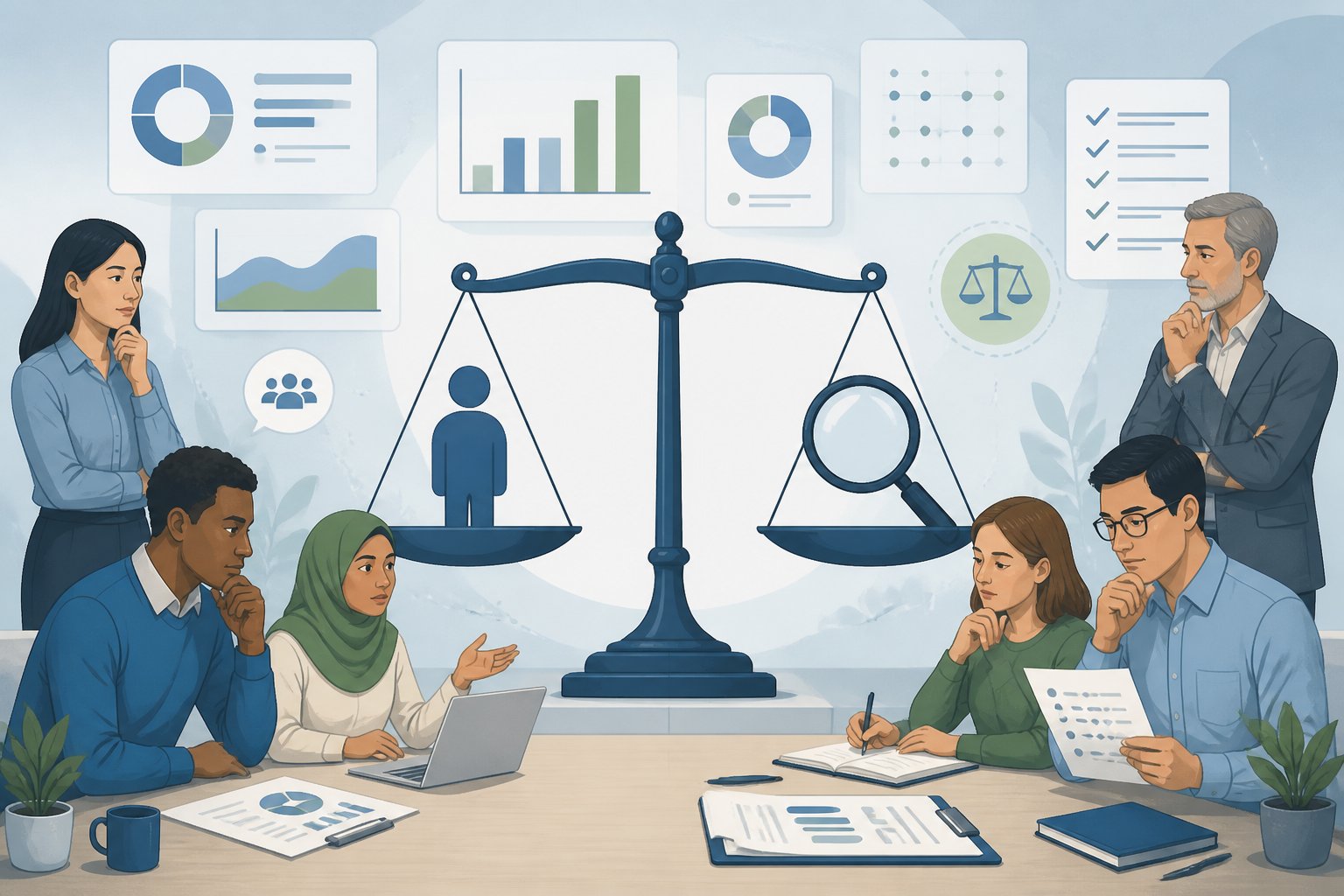
Researchers have developed several tools to assess how sensitive you are to injustice, ranging from quick questionnaires to detailed behavioral observations. These measurements help identify your specific patterns of reacting to unfair situations.
Self-Report Scales
The most common way to measure justice sensitivity involves answering questions about your thoughts and feelings regarding unfair situations. The Justice Sensitivity Inventory uses 40 items to assess four different perspectives of how you experience injustice.
If you need a faster assessment, the Justice Sensitivity Short Scales-8 (JSS-8) provides an efficient option with just eight total items. For even quicker screening, two-item scales exist for each justice perspective.
These scales typically measure your responses from four viewpoints:
- Victim sensitivity: How strongly you react when you experience unfairness
- Observer sensitivity: Your emotional response when witnessing injustice toward others
- Beneficiary sensitivity: Your discomfort when receiving undeserved advantages
- Perpetrator sensitivity: Your feelings about committing unfair acts
The questions focus on the intensity of your emotional reactions and the personal strain you feel when facing unjust situations.
Behavioral Assessments
Beyond questionnaires, researchers observe how you actually behave in situations involving fairness. These assessments examine your real actions rather than your self-described tendencies.
Behavioral measures might include economic games where you make decisions about resource distribution. Researchers watch whether you choose fair or unfair options when given the chance. They also track how quickly you notice injustice and what steps you take to address it.
These methods provide valuable data because your actual behavior sometimes differs from how you think you would respond. They reveal patterns in how you adhere to justice standards in practical situations.
Cross-Cultural Instruments
Justice sensitivity measurements have been validated across different cultures, including samples from the Philippines, Australia, and Germany. This validation ensures the scales work properly regardless of your cultural background.
Researchers established metric invariance across these populations, meaning the measurements capture the same concepts across cultures. You can trust that these tools accurately assess your justice sensitivity whether you speak English, German, or other languages.
English-language adaptations have been specifically developed and tested to maintain accuracy when translated from the original German versions.
Impact on Relationships

Your justice sensitivity shapes how you connect with others and handle disagreements. People with high justice sensitivity often struggle with interpersonal forgiveness and may keep mental records of perceived unfairness in their relationships.
Conflict Resolution
When you have high justice sensitivity, conflicts in your relationships can feel more intense. Small issues like being left out of a group chat or not receiving credit for your work can trigger strong emotional reactions.
You might find yourself holding onto grievances longer than others do. This happens because your brain processes unfairness more deeply, making it harder to let go of past hurts.
Your sensitivity to justice influences your perceptions and behaviors during disagreements. You may keep score of who did what, which can create tension even when conflicts seem resolved on the surface.
The challenge lies in distinguishing between actual injustices and minor oversights. When you view every small slight as a serious offense, you make it harder for both you and your partner to move forward.
Interpersonal Trust
Justice sensitivity affects how you build and maintain trust with others. You pay close attention to whether people treat you fairly, which means you notice inconsistencies in how others behave.
Your emotional responses to injustice and overall well-being are closely tied to your ability to trust. When someone breaks your trust through unfair treatment, you feel the impact more deeply than others might.
You might struggle to trust people who have wronged you in the past. Even after apologies, you may remain cautious because your memory of the injustice stays vivid.
This heightened awareness can actually protect you from genuinely harmful relationships. You spot red flags earlier and set boundaries more quickly when you sense unfair treatment patterns.
Societal and Cultural Factors
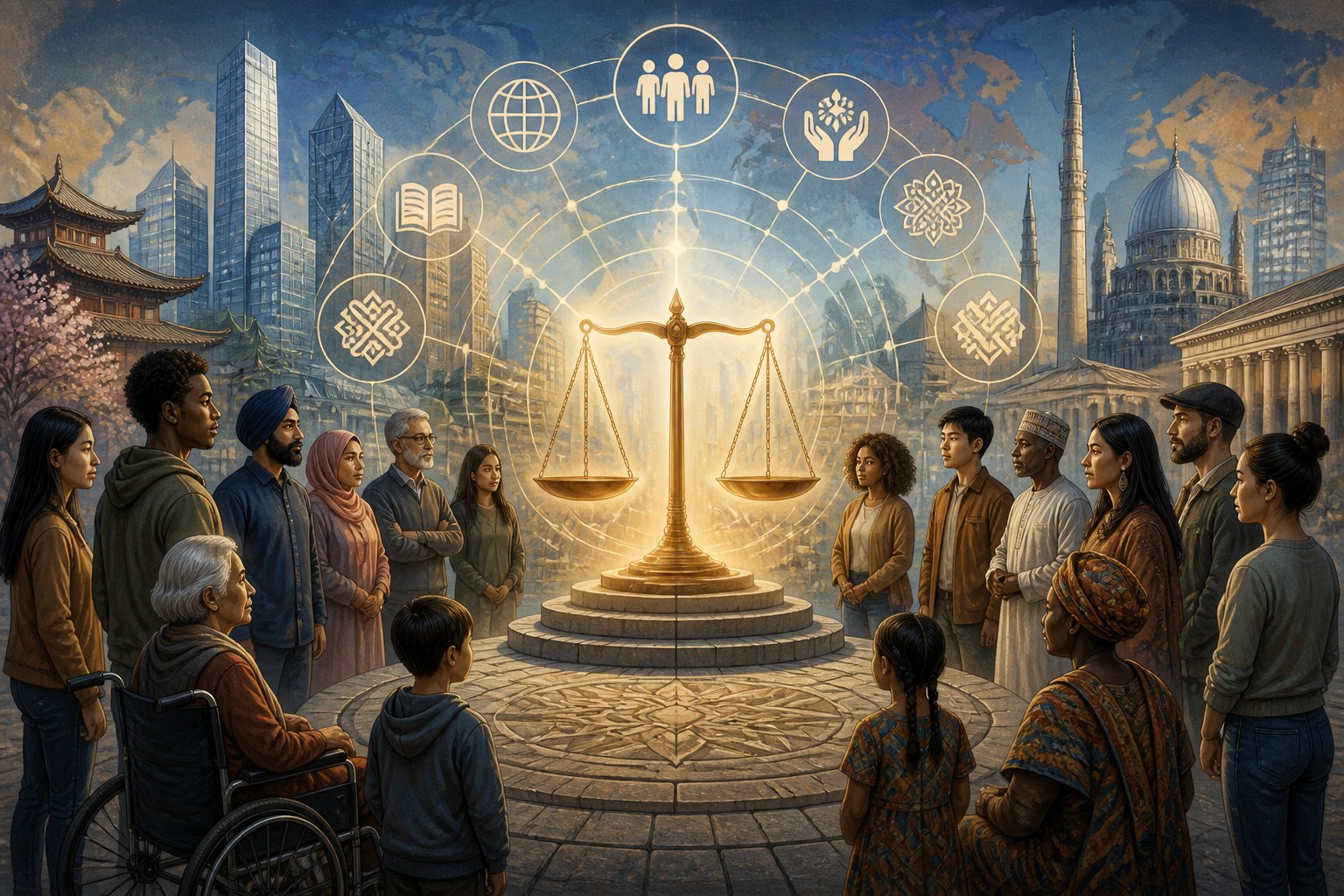
Your sensitivity to justice doesn’t develop in isolation. The culture you grow up in and the social groups you belong to shape how you recognize unfairness and respond to it.
Norms and Values
Your cultural background determines what you consider fair or unfair in daily life. Different societies hold distinct views about what justice means and how it should work. Cross-cultural research on justice perceptions shows that ethical principles vary significantly across cultural boundaries.
In some cultures, you might prioritize group harmony over individual rights. In others, personal fairness matters most. These values influence your justice sensitivity from childhood.
Your family’s beliefs, religious teachings, and community standards all play a role. Cultural norms and familial structures profoundly influence how you perceive and address unfair treatment. What seems like a serious injustice in one setting might appear normal in another.
The society around you teaches you which situations deserve your attention and emotional energy. You learn these lessons through repeated experiences and observations of how others react to unfair events.
Group Dynamics
The groups you belong to affect how strongly you react to injustice. Your position within a group changes what types of unfairness you notice most. Research shows that different justice sensitivity perspectives predict cooperation behavior across various cultural settings.
When you identify strongly with a group, you become more sensitive to threats against it. You might react more intensely when your group faces discrimination than when the same thing happens to outsiders.
Your social role matters too. Leaders often develop higher sensitivity to unfairness because they must maintain group cohesion. People in lower-status positions may become more alert to being exploited or treated unfairly by those with power.
Group expectations can either amplify or suppress your reactions to injustice. Some communities encourage speaking up about unfairness, while others value keeping quiet to maintain peace.
Links to Moral Judgments

Your level of justice sensitivity shapes how you evaluate right and wrong in everyday situations. Research shows that justice sensitivity predicts neural responses during moral evaluations, affecting both how you process moral information and the conclusions you reach about others’ behavior.
Responsibility Attribution
When you witness someone doing something wrong, your justice sensitivity influences how much blame you assign to them. People with high justice sensitivity tend to hold others more accountable for moral violations.
Your brain processes moral judgments through a combination of emotional and cognitive systems. Neural computations that support moral judgment show that your justice sensitivity affects how these systems work together. If you have strong justice sensitivity, you may react more intensely when evaluating harmful actions.
The way you attribute responsibility also depends on which perspective of justice sensitivity you experience most. When you focus on victims of injustice, you typically show greater concern for those who have been harmed and assign more blame to wrongdoers.
Justice Motivation
Your motivation to respond to unfair situations connects directly to your moral judgments. Justice sensitivity perspectives impact moral judgments of both actions people should avoid and positive actions they should take.
Other-oriented justice sensitivity reflects a genuine concern for others’ wellbeing. When you experience this type of sensitivity, you’re more likely to make moral judgments that protect vulnerable people.
Your justice motivations can sometimes conflict with each other. You might feel pulled between defending a victim and maintaining group harmony. These competing motivations shape your final moral judgments in complex ways that reflect your personal values and experiences.
Mental Health Connections
Justice sensitivity shapes your emotional responses and stress levels in ways that directly affect your psychological well-being. The intensity with which you perceive unfairness can create both protective factors and vulnerabilities in your mental health.
Emotional Well-Being
Your emotional well-being takes a significant hit when you experience high justice sensitivity. You may find yourself feeling angry, anxious, or sad more frequently than others when you witness or experience unfair treatment.
These emotional responses aren’t just passing feelings. They can build up over time and affect your overall mood and life satisfaction. When you constantly notice injustices around you, your brain stays in a heightened state of alertness.
Prosocial justice sensitivity can become problematic when it turns obsessive, even though caring about fairness for others seems positive. You might struggle to let go of unfair situations that don’t directly involve you.
The good news is that justice sensitivity can be an asset when you understand and manage it well. You can channel your awareness of unfairness into productive actions rather than letting it drain your emotional resources.
Vulnerability to Stress
Your stress levels increase when you have high justice sensitivity because you’re processing more emotional information than others. Each unfair event you notice triggers your stress response system.
People with justice sensitivity may face difficult years ahead and need to actively protect their mental health. You’re more vulnerable to burnout because your nervous system stays activated longer after witnessing injustice.
This vulnerability shows up in several ways:
- Difficulty sleeping after experiencing or witnessing unfair treatment
- Physical symptoms like headaches or stomach problems
- Trouble concentrating on daily tasks
- Exhaustion from emotional processing
You need specific coping strategies to manage this stress effectively. Setting boundaries around news consumption and social media can help reduce your exposure to constant injustice. Taking intentional breaks and practicing self-care aren’t luxuries for you—they’re necessary tools for maintaining your mental health.
Applications in Everyday Life

Justice sensitivity shapes how you respond to unfair treatment at work and influences your reactions to unequal practices in schools. These settings often trigger strong responses when you notice inconsistent rules or biased treatment.
Workplace Settings
Your heightened awareness of injustice can make you particularly attentive to workplace fairness issues. You might notice when colleagues receive unequal treatment or when managers apply rules inconsistently.
This awareness can be valuable. You may speak up about unfair policies or advocate for coworkers who face discrimination. Your sense of fairness can drive positive changes in workplace culture.
However, challenges can arise when you focus intensely on every perceived injustice. You might experience increased stress when observing or experiencing unfair treatment. Interpersonal conflicts can develop when you frequently call out minor inconsistencies or feel frustrated by workplace decisions that seem unfair.
Finding balance helps you use your justice sensitivity productively. Pick your battles by addressing significant issues rather than every small inconsistency. Consider whether speaking up will create meaningful change before engaging in conflict.
Educational Environments
Schools present numerous situations where you might notice unfair treatment. You may observe teachers showing favoritism, grading inconsistently, or applying disciplinary rules unevenly to different students.
Your sensitivity can benefit the school community. You might advocate for fairer policies or support students who face discrimination. Teachers with justice sensitivity often work to create more equitable classroom environments.
The challenge comes when your strong reactions to unfairness create ongoing distress. You might struggle with cognitive inflexibility when rules change or get applied differently than expected. This can lead to frustration with administrative decisions or conflicts with educators.
Managing your responses helps you stay engaged without becoming overwhelmed. Focus on systemic issues rather than individual incidents. Channel your concern into constructive actions like joining student committees or proposing policy changes through appropriate channels.
Research Trends and Future Directions

Recent studies show that justice sensitivity research is evolving to address new challenges and applications. You’ll find that researchers are exploring how this trait influences behaviors beyond traditional settings.
One growing area examines how justice sensitivity relates to environmental concerns. Studies suggest that your sensitivity to injustice might predict pro-environmental behaviors. This connection opens doors for understanding how personal values drive climate action.
Key areas researchers are exploring include:
- How intentionality affects responses to unfair situations
- The role of justice sensitivity in climate resilience planning
- Better measurement tools across different cultures
- Links between justice concerns and social change
Current research suggests that unjust situations trigger a wider range of responses than previously thought. You might experience anger, guilt, rumination, or desires for compensation depending on your perspective.
Future studies need to move beyond self-report measures. Researchers recommend incorporating alternative methods to capture your real-time reactions to injustice.
Crime and justice researchers are also calling for more interdisciplinary work. You can expect to see collaborations across psychology, sociology, law, and environmental science. These partnerships will help address complex questions about how your sensitivity to justice shapes society.
The field continues to expand into new territories while refining existing theories about how you perceive and respond to fairness.
Final Reflections
A strong sense of justice is something to value. It motivates us to advocate for others, uphold our principles, and contribute to a fairer world. But protecting your own well-being is just as important as pursuing fairness for everyone else. Learning to distinguish between what you can influence and what you cannot allows your moral compass to become a source of purpose rather than chronic frustration.
Reverse Optimism reminds us that disappointment often grows from the gap between how we believe the world should work and how it actually does. While we may not be able to eliminate injustice, we can choose responses that are thoughtful, resilient, and grounded in reality. Accepting that life isn’t always fair doesn’t mean lowering your standards—it means preserving your energy for the moments where your actions can truly make a difference.
If you’d like to explore more ways to manage expectations, build resilience, and navigate life’s inevitable disappointments with clarity and confidence, tune into The Reverse Optimism Pathway podcast. Each episode offers practical strategies and thoughtful insights to help you cultivate a healthier, more balanced mindset.
Listen to The Reverse Optimism Pathway Podcast
Your commitment to fairness can be one of your greatest strengths. With balance, perspective, and resilience, it can inspire meaningful action—without sacrificing your own peace of mind.
Frequently Asked Questions
Many people wonder whether their reactions to unfairness fall within a normal range or signal something worth examining more closely. Understanding the roots, expressions, and management of justice sensitivity can help you navigate strong emotional responses and find practical ways to cope.
How can I tell whether my strong reactions to unfairness are typical or something to explore further?
You might notice that your responses to unfairness are stronger than those of people around you. If you find yourself dwelling on injustices for days, losing sleep over situations that others seem to move past quickly, or feeling physical symptoms like tension or nausea when witnessing unfair treatment, your reactions may be more intense than average.
Pay attention to whether these reactions interfere with your daily life. Do they affect your work performance, strain your relationships, or leave you feeling emotionally drained? If your responses to unfairness create significant distress or prevent you from functioning well in everyday situations, it may be worth exploring further with a mental health professional.
What are some everyday examples of reacting strongly to unfairness at work, school, or in relationships?
At work, you might feel intense anger when a colleague takes credit for your idea or when promotions seem to favor certain employees unfairly. You may speak up immediately or spend hours mentally rehearsing what you should have said.
In school settings, you might become upset when a teacher grades inconsistently or when group projects leave one person doing all the work. These situations can trigger strong emotional responses that last well beyond the actual event.
In relationships, you might react strongly when a friend cancels plans repeatedly or when you feel your partner isn’t contributing equally to household tasks. Small perceived slights can feel much larger than they appear to others.
What factors can contribute to heightened sensitivity to injustice, including upbringing, stress, or temperament?
Your upbringing plays a significant role in shaping how you respond to unfairness. If you grew up in an environment where rules were applied inconsistently or where you witnessed or experienced injustice, you may have developed a stronger sensitivity to these situations.
Chronic stress can amplify your reactions to perceived injustice. When you’re already feeling overwhelmed, even minor unfair situations can trigger disproportionate emotional responses.
Your natural temperament matters too. Some people are born with personality traits that make them more attuned to fairness and equity. If you score high in conscientiousness or have strong emotional sensitivity, you may naturally notice and react more to unfair treatment.
How is this trait related to autism, ADHD, or other neurodivergent profiles?
Justice sensitivity in autism describes how readily you notice unfairness and how strongly you react to it in thought, feeling, and behavior. Many autistic individuals experience intense reactions to perceived injustice, which can sometimes lead to meltdowns or shutdowns.
ADHD justice sensitivity involves neurobiological factors that create intense reactions to unfairness. People with ADHD often process emotions more intensely, which can make witnessing or experiencing injustice feel overwhelming.
Both conditions involve differences in emotional processing and regulation. These differences aren’t weaknesses but rather variations in how your brain responds to information about fairness and equity.
Are there reliable self-assessments or questionnaires that can help me understand my pattern of responses?
The Justice Sensitivity Scale characterizes how strongly you notice and respond to perceived justice violations across common contexts. This assessment samples your cognitive appraisals, emotional responses, and behavioral tendencies related to unfair treatment.
The scale typically examines four perspectives: victim, observer, beneficiary, and perpetrator. Each perspective looks at how you respond when you experience unfairness directly, witness it happening to others, benefit from it, or cause it yourself.
These questionnaires can provide insight into your patterns, but they’re not diagnostic tools. They simply help you understand where you fall on the spectrum of justice sensitivity compared to others.
What are practical, healthy strategies for coping with feelings of anger, guilt, or distress when I witness unfairness?
Start by pausing before reacting. Take a few deep breaths and ask yourself whether immediate action is necessary or whether you need time to process your emotions first.
Channel your reactions into constructive action when possible. If you witness workplace unfairness, document what you observe and consider appropriate channels for addressing it. This gives your strong feelings a productive outlet.
Practice perspective-taking to understand why unfair situations occur. Sometimes what appears unfair has context you’re not aware of, though this doesn’t mean you should dismiss genuine injustices.
Set boundaries around how much time you spend thinking about unfair situations. Allow yourself a specific window to process your feelings, then consciously shift your attention to other activities. Physical exercise, creative outlets, or talking with trusted friends can help you release intense emotions in healthy ways.